In Ghana, the land of our forefathers who fought for independence and liberty, the very essence of freedom is under siege. The ruling New Patriotic Party government under the leadership of Nana Akufo-Addo, a self-proclaimed champion of human rights and lawyer by training, has betrayed the core principles of liberty and justice. What was at one time loudly heralded as an administration of prosperity and liberty has now become an outlawed administration of abuse of power, suppression of freedom of speech, unlawful arrests, and the systematic erosion of press freedoms. How did this come to be, and how long will we really permit our liberties to be trampled by a government that loudly proclaims that it serves the people?
THE ILLUSION OF HUMAN RIGHTS ADVOCACY
Akufo-Addo, who rose through the ranks as a lawyer and an advocate for human rights, is leading a regime that has become a perpetrator of the very violations he once fought to defend. The people of Ghana have been no strangers to hearing from leaders how free and just their country is. But what we see in the Akufo-Addo regime is an arrogant disregard for freedom and justice. The facade of human rights activism cloaking this regime has fallen, revealing the most unashamedly authoritarian manner of governance.
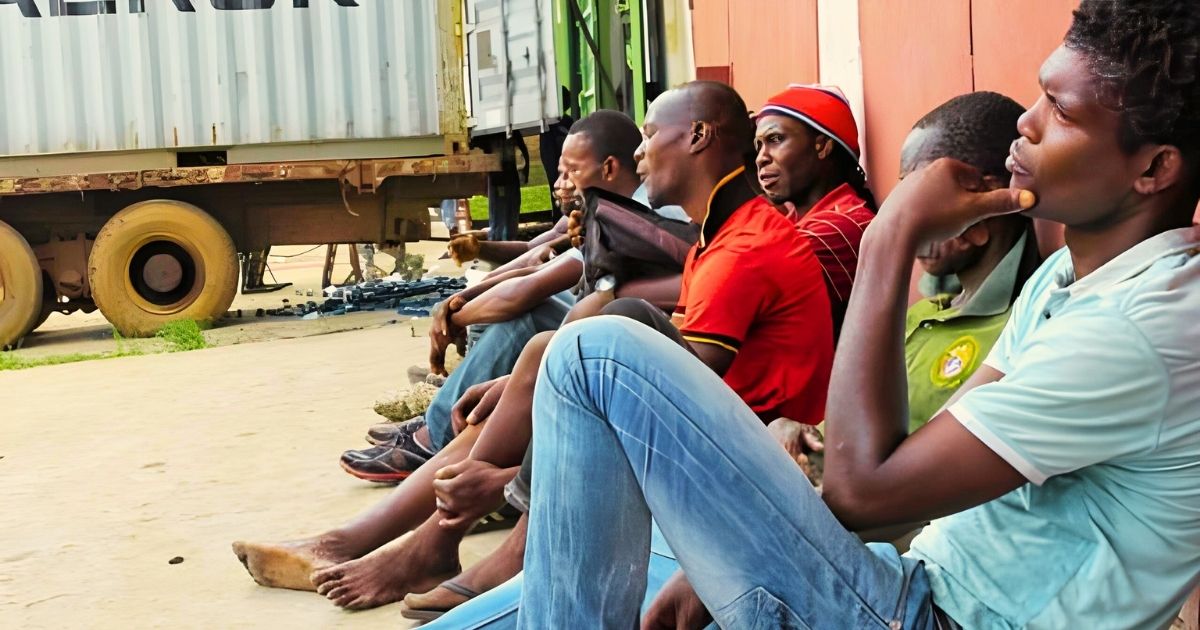
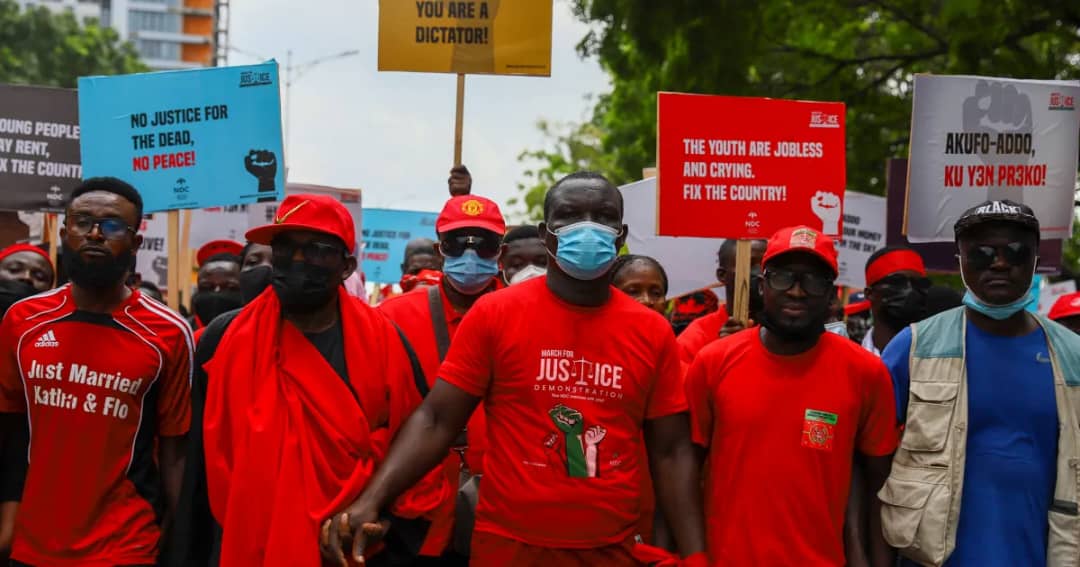
Recently, the level of ruin is made evident through the illegal detention of those who took to the streets against the environmental devastation known as “galamsey,” (illegal mining), The rights of citizens have been trampled on and we are in a state of horror. Instead, the government chose to keep on reacting with brute force to the legitimate concerns of citizens through abduction and unlawful arrest. This is not what is expected of a government that respects freedom of speech and the right to peaceful assembly; this is an administration desperate to cling to power at all costs.
GALAMSEY: A CRISIS PLAGUING OUR NATION
The galamsey crisis, that has laid waste to Ghana’s water bodies and verdant vegetation, is but a symptom of the most basic problem: complicity by a government that is supposed to uphold the law. The illegal mining operations that fouled up rivers, destroyed ecosystems, and put livelihoods in jeopardy did not fall from the sky. The Corruption of government officials and their interests in the mining business have kept this destructive practice going amidst a storm of protests by ordinary Ghanaians. Instead of tackling the root cause of the crisis, which is sending the country’s economy into turmoil, and bringing these culprits to book, the government has turned its wrath on none other than those who have been trying to save their communities from environmental ruin.
The illegal detentions of the peaceful protesters who have had the temerity to speak against galamsey illustrate a wider trend within the Akufo-Addo regime: deploying state power to crush dissent. Protesters who deserve accolades for their courage in standing up in defence of Ghana’s environment are being treated like criminals. The message is simple from the government: challenge us, and you will face the full weight of state repression.
PRESS FREEDOM UNDER SIEGE
In any healthy democracy, the press forms a crucial check on the power of government. But under Akufo-Addo’s rule, those freedoms have been whittled away: journalists investigating corruption, human rights abuses, or the failure of government to take action against the galamsey crisis have been harassed, threatened, and in some instances arrested. This crackdown on the press constitutes a direct attack on people’s right to know the truth about how their country is being run.
Still haunting Ghana is the brutal murder of corruption-exposing journalist, Ahmed Hussein-Suale. The government vowed that it would bring his killers to justice; however, no one has been held accountable for the crime. Meanwhile, fear keeps growing with reporters increasingly self-censoring for fear of being the next target. This is not the Ghana we were promised. Without a free press, which is the lifeblood of democracy, there breeds only authoritarianism.
A LIBERTARIAN PATH FORWARD: RESTORING FREEDOM AND ACCOUNTABILITY
The libertarian answer to this crisis of governance is that which should come as second nature: decentralize power, reduce government control, and restore the individual freedoms now under attack. This is what the Akufo-Addo administration has shown us: that when a government becomes too powerful, it grows into a threat against the very people it is supposed to protect.
1. Decentralization of Authority: The basic tenet of libertarianism is that the power of a state should be reduced to the least. This amount of critical mass of authority in the hands of few allows for the kind of abuses we are seeing today. The answer, therefore, lies in returning the power to the people by way of decentralizing it. Communities should have a say in where the resources are being invested and how they are being used. This would, in turn, empower the citizens and create obstacles for corrupt officials to manipulate the system for their benefit.
2. Privatization and Accountability: Corruption is known to thrive wherever the state has uninhibited control over national resources. In addressing the galamsey crisis, we have to loosen the stranglehold of government over natural resource management. In fact, strict regulation and independent oversight, as well as privatization of mining would place full responsibility on any mining company for environmental devastation and compel the latter to pay just compensation to communities affected. In fact, this will also break the corrupt ties between government officials and illegal miners that have allowed galamsey to take hold.
3. Free Speech/Free Press: Free speech is not up for debate in any state that values freedom. It’s time to end the government crackdown on protesters and journalists. Libertarians believe a free marketplace of ideas is core to the progress of societies. Obviously, citizens must be free to criticize their government with no fear of retribution. Restoring press freedoms and ensuring that journalists are able to operate without fear of harassment or violence is critical for restoring public confidence in government institutions.
4. Judicial Independence: For the check on abuse of state power, Ghana’s judiciary needs to be independent and not be subject to any political interference. Unlawful arrests and suppression of dissent call for immediate and decisive legal action against the perpetrators. An independent judiciary can help to check on the wings of government excesses and assure that offenders who trample on the rights of citizens are punished accordingly.
CALL TO ACTION
The abuses of the Akufo-Addo administration are not isolated incidents; they are symptoms of a government that has lost its bearing. should we do nothing now, we run the very real risk of losing those freedoms our forefathers fought to give us. The Ghanaian people deserve better than a government that will silence critics and crush peaceful protests, while enabling environmental destruction.
We must demand a return to the principles of liberty, accountability, and justice. The time for complacency is over. It is time for the people of Ghana to rise up and take back their freedom from a government that has betrayed their confidence.
Ghanaians need to get back to the principles of liberty, accountability, and justice. Complacency can no longer be our approach now. Ghanaians can no longer be content with the traditional ways of protest, which is usually suppressed. Instead, what is needed now is a more aggressive strategy. One possible line of pursuit is through the establishment of Community-led Organizations that would spearhead peaceful yet continuous economic boycotts, digital advocacy drives, and legal actions against unconstitutional government policies. The use of the purse as an instrument of change comes into play when the refusal to support businesses and institutions that are complicit with such government abuses is resorted to by the citizens. It will also allow the people to coordinate outside of government surveillance or interference by building an independent digital platform where grievances are aired and mobilization efforts are organized. In overcoming threats, building alliances with international human rights organizations and the use of international media are crucial in pressuring the government. The international publicity can act as protection for the backlash against the activists. And lastly, there is the concept of solidarity wherein an attack on one would mean an attack on all-the idea that any arrest or abuse committed on any person must be responded to with a collective and organized action by all.
In that respect, if the government is genuinely repentant, it should know what it needs to do to make amends: institute immediate reforms to give full independence to oversight bodies-an independent judiciary, election commission, and human rights commissions-to investigate various charges of corruption and human rights abuses.
The reinstatement of complete press freedoms and the repeal of all laws used to criminalize dissent are part of that process. Also needed are regular public forums where citizens can hold their leaders accountable without fear of repression. The government should also come forward and acknowledge past wrongs through effective reparations or redress of those who have been unlawfully detained or harassed in the protests. Any true repentance must be matched with transparent and measurable actions, not mere rhetoric.
Haleed Sulemana Namyella (send him mail) is a Human Rights Advocate & Development Professional . He Serves as a research Associate of the Institute for Liberty and Economic Education (ILEE). Mobile Phone: (+233) 24 051 0973.
DISCLAIMER: “The views expressed on ileeghana.org are not necessarily those of Institute for Liberty and Economic Education (ILEE)”.

The editorial team at the Institute for Liberty & Economic Education (ILEE) is comprised of dedicated professionals committed to promoting individual liberty, free markets, and private property. With expertise in public policy research and analysis, our team crafts insightful editorials that advance the principles of economic freedom and limited government, informing and engaging readers on critical issues affecting society.