

An ILEE assessment of fiscal sustainability, private enterprise and public value
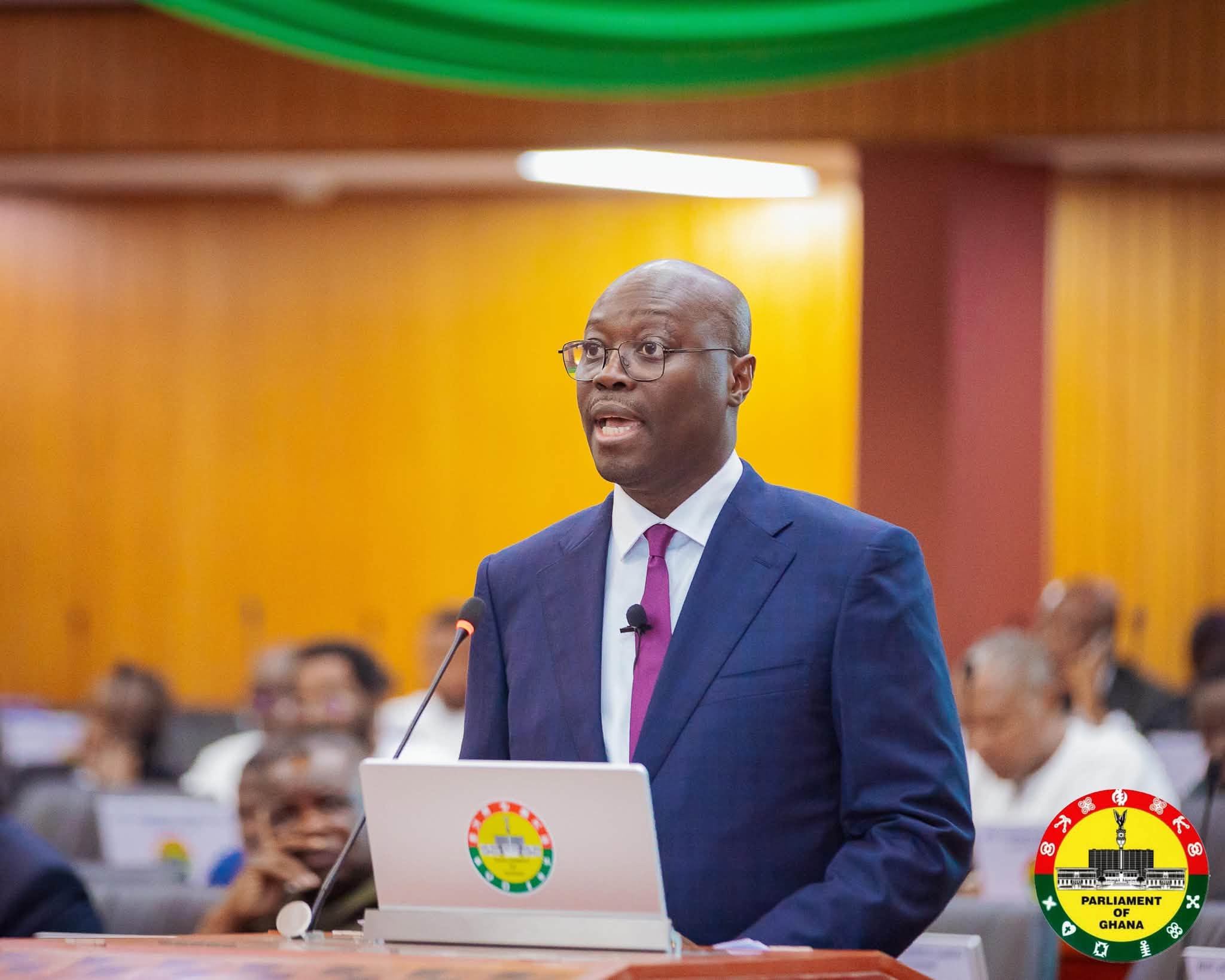
Photo: Parliament of Ghana
Key takeaways
- The 2027 Budget builds on recent macroeconomic gains, but stability is a foundation for growth, not a substitute for it.
- Revenue and expenditure targets are demanding, and a GH₵61.0 billion interest bill continues to crowd out development spending.
- Many flagship interventions rely on state direction, preferential procurement and import restrictions. This sits uneasily with the stated goal of a private-sector-led economy.
- Delivery will be decisive. Transparent procurement, published project data, and independent evaluation should accompany every major program.
Introduction
Ghana’s 2027 Budget Statement was presented to Parliament on 12 November 2026 under the theme “The New Economy, New Ghana, Jobs and Prosperity”. It is an ambitious attempt to reposition the economy through industrial transformation, infrastructure investment, job creation and macroeconomic stability.
The central question is not whether Ghana needs a new economic direction. It does. The more important question is whether the government’s approach will produce a competitive, productive economy, or deepen the country’s dependence on state intervention, public expenditure and politically directed investment.
The budget offers an opportunity to consolidate recent macroeconomic improvements. Its success, however, will depend less on the ambition of its announcements than on the quality of implementation, the discipline of fiscal management, and the extent to which private enterprise is allowed to lead economic transformation.
Macroeconomic stability: progress worth protecting
The government’s projections signal renewed confidence in Ghana’s economic outlook. For 2027:
- Real GDP growth is projected at 5.2%, with non-oil growth targeted at 5.7%.
- Inflation is targeted to close the year at 8%, within a band of plus or minus two percentage points.
- International reserves are targeted to cover at least six months of imports.
Recent outturns are encouraging. By October 2026, inflation had moderated to 5.5% and public debt stood at about 47.5% of GDP, although the cedi had depreciated by about 10.1% against the US dollar year to date. By the end of September, gross international reserves had reached approximately 4.5 months of import cover.
These developments provide a foundation for recovery, but they should not be mistaken for a lasting solution to Ghana’s economic difficulties. Lower inflation does not automatically translate into higher household purchasing power, better employment prospects or stronger productive capacity. Similarly, a lower debt-to-GDP ratio does not mean the government’s financing constraints have disappeared.
The real test is whether macroeconomic stability can be converted into sustained private investment, productivity growth and improved living standards.
Revenue and expenditure: the difficult fiscal equation
The headline numbers
- Total revenue and grants: GH₵323.1 billion.
- Total expenditure: GH₵375.0 billion on a commitment basis, and GH₵389.2 billion on a cash basis (21.6% of GDP).
- Fiscal deficit: 2.9% of GDP (GH₵51.9 billion) on a commitment basis and 3.6% of GDP (GH₵65.8 billion) on a cash basis.
- Non-oil tax revenue: GH₵255.8 billion.
The commitment-basis and cash-basis figures reflect different accounting treatments and should be read separately rather than combined as a single calculation.
Revenue: mobilization without overreach
Non-oil tax revenue carries much of the government’s revenue strategy, which places particular weight on tax administration, compliance and the formalization of economic activity. The budget introduces no new taxes, relying instead on better collection and compliance. However, stronger collection does not automatically mean a lighter fiscal burden. The government must show that existing tax instruments can raise sufficient revenue without placing excessive pressure on businesses, investment and consumption.
Revenue mobilization should therefore focus on:
- widening the tax base;
- reducing exemptions that cannot be economically justified;
- improving digital tax administration;
- addressing transfer pricing; and
- tackling leakages in public revenue collection.
It should not become a pretext for aggressive enforcement against businesses that already comply.
Expenditure: the weight of the interest bill
On the expenditure side:
- Employee compensation: GH₵104.1 billion.
- Interest payments: GH₵61.0 billion, comprising GH₵51.5 billion in domestic interest and GH₵9.5 billion in external interest.
- Capital expenditure: GH₵98.4 billion, as set out in the detailed fiscal framework rather than the rounded figures used in public summaries.
The interest bill remains a major concern. Every cedi committed to debt service is a cedi unavailable for infrastructure, healthcare, education or other development priorities. Ghana must therefore avoid a return to the borrowing practices that contributed to its recent fiscal difficulties.
Flagship programs
The budget proposes GH₵27.8 billion for the Big Push program and GH₵30 billion for the New Economy program. These are significant commitments, and their economic value will depend on project selection, procurement transparency, independent monitoring and measurable returns. The New Economy is also framed as a US$10 billion initiative over 2027–2030. This multi-year ambition should not be confused with the 2027 budget-year allocation.
Sector-by-sector assessment: ambition and implementation risk
Agriculture and food security
The government’s agricultural program emphasizes rice, poultry, maize and soya, aquaculture, oil palm, vegetables, sugar and cocoa. Proposed interventions include machinery, fertilizer, improved seeds, storage facilities, irrigation and support for local production.
This is a sensible direction. Ghana cannot sustainably create jobs or strengthen food security while remaining heavily dependent on imported food. However, import restrictions and protectionist measures should not precede gains in local productivity. Restricting imports before domestic producers can supply affordable, good-quality alternatives risks raising food prices and harming consumers.
The priority should be competitive local production, supported by reliable irrigation, agricultural research, storage, transport and access to markets.
Energy
Energy security is fundamental to industrial growth. The proposed investments in thermal generation, solar power, battery storage, transmission infrastructure and prepaid metering recognize the importance of reliable electricity.
The sector’s history of financial distress, however, calls for caution. Outstanding obligations to independent power producers and fuel suppliers show that the problem is not simply insufficient generation capacity. It is also a problem of pricing, revenue collection, commercial management and governance.
Expanding state ownership without resolving these weaknesses could reproduce existing liabilities. Private-sector participation, transparent contracts and financially disciplined utility management should be central to reform.
Critical minerals and industrialization
The government’s ambition to process more of Ghana’s manganese, bauxite, lithium and gold domestically is economically understandable. Exporting raw materials while importing higher-value manufactured goods limits opportunities for industrial development and employment.
Export restrictions, however, must be carefully sequenced. Ghana should first establish credible investment arrangements, reliable energy, transport infrastructure, technical capacity and competitive processing facilities. Otherwise, restrictions may discourage investment, reduce export earnings and create opportunities for smuggling.
Local value addition is best encouraged through a predictable investment environment, not through poorly designed prohibitions.
Tourism, textiles and pharmaceuticals
The proposed investments in tourism, culture, textiles and pharmaceutical manufacturing offer opportunities to diversify the economy. Local procurement of uniforms and hospital textiles could support domestic manufacturers, while local pharmaceutical production could reduce import dependence and strengthen health security.
Government purchasing decisions, however, should not sacrifice value for money. Local suppliers must be able to meet acceptable standards of quality, price and delivery. Pharmaceutical industrialization likewise requires strong regulation, quality assurance, research capacity and access to competitive financing.
Government’s role should be to create an environment in which private businesses can succeed, not to become the principal operator of commercial enterprises.
Technology and digital transformation
The proposed technology investments, including artificial intelligence initiatives, rural connectivity and digital skills development, are important for Ghana’s long-term competitiveness.
Establishing technology centers, however, is not the same as building a technology economy. Ghana needs reliable broadband, affordable devices, stronger digital education, cybersecurity capacity and research partnerships. It also needs an environment in which technology start-ups can access capital and markets.
The ultimate measure should be the productivity gains and employment opportunities created, not the number of centers or programs announced.
Education, health and social protection
Allocations to education, healthcare, the National Health Insurance Scheme, MahamaCares, school feeding and social protection reflect the importance of human capital in development.
These investments are necessary, but spending levels alone do not establish success. Education policy should place greater emphasis on learning outcomes, numeracy, science, technical education and employable skills. Healthcare spending should improve access, service quality, medicine availability and accountability.
Social protection is particularly important for vulnerable households. Programs must nonetheless be transparently targeted and regularly evaluated to ensure that resources reach their intended beneficiaries.
Infrastructure, transport and public administration
The Big Push program, road investments and water infrastructure initiatives could ease important constraints on productivity. Better roads, reliable water supply and efficient transport can reduce business costs and connect producers to markets.
Infrastructure spending has historically been vulnerable to cost overruns, abandoned projects and procurement irregularities. The government should therefore publish project costs, contractors, timelines and completion targets, and Parliament and independent oversight institutions should be able to scrutinize implementation.
Security, justice and public administration also deserve adequate funding, but public-sector spending must be matched by measurable improvements in service delivery and institutional accountability.
The ideological question: capitalism or state-led development?
Viewed from a classical liberal and libertarian perspective, the budget contains a notable tension. Its stated ambition is a private-sector-led economy, yet several of its major interventions rely on state-directed investment, public ownership, preferential procurement, import restrictions and selective industrial support.
There is nothing inherently wrong with public investment. A capable state has legitimate responsibilities in infrastructure, education, healthcare, national security, the rule of law and the provision of public goods. Markets also need effective institutions, protection of property rights and impartial regulation.
The concern arises when government moves beyond enabling markets and begins to determine which industries should succeed, which businesses should receive preferential treatment and how resources should be allocated. Such an approach can distort competition, encourage rent-seeking and make businesses dependent on political decisions rather than on productivity and innovation.
A genuinely competitive market economy requires predictable laws, secure property rights, open markets, access to finance, efficient regulation and the freedom for entrepreneurs to identify opportunities. Government should set the rules and provide essential public infrastructure, while allowing private capital and enterprise to drive production.
Ghana does not necessarily need a larger state to become more prosperous. It needs a more capable, disciplined and accountable one.
What should government prioritize?
Five policy priorities deserve particular attention:
- Protect fiscal credibility. Revenue projections should be realistic, borrowing disciplined and expenditure commitments aligned with available resources.
- Make the private sector the principal engine of industrialization. The government should remove regulatory barriers, improve access to finance, protect property rights, and encourage domestic and foreign investment.
- Prioritize productivity over protectionism. Local industries should become competitive through technology, skills, infrastructure and efficient production, not through excessive restrictions on imports.
- Strengthen transparency and accountability. Major programs should have publicly accessible budgets, procurement information, implementation milestones and independent performance evaluations.
- Measure development by outcomes. Employment, real household incomes, productivity, export diversification, learning outcomes and access to quality healthcare should matter more than the number of projects announced or the funds allocated.
Conclusion
Ghana’s 2027 Budget is ambitious and contains several worthwhile initiatives. Its emphasis on industrialization, agricultural productivity, infrastructure, technology and human capital reflects genuine national development priorities.
Ambition, however, must not be mistaken for economic transformation. Ghana’s development challenge is not a shortage of government programs. It is the persistent difficulty of converting public resources into productive capacity, competitive businesses and sustainable employment.
The country must avoid the temptation to treat state spending as a substitute for private-sector dynamism. It must also resist the belief that import restrictions, state ownership and government-directed investment can, on their own, deliver industrialization.
The most effective government is not necessarily the one that controls the largest share of economic activity, but the one that creates the conditions in which citizens and businesses can prosper.
Ultimately, the success of the 2027 Budget will be judged not by the appeal of its theme or the size of its allocations, but by whether, by the end of 2027, Ghana has more productive businesses, better-paying jobs, stronger institutions, greater economic freedom and improved living standards.
A new economy requires more than new spending. It requires a new discipline in how the state governs, how markets function and how the nation creates wealth.
Sources
- Ministry of Finance, Republic of Ghana. The 2027 Budget Statement and Economic Policy (presented 12 November 2026). https://www.mofep.gov.gh
- Graphic Online. “GH¢389.2billion budget: Ato Forson unveils 2027 spending plan”, 12 November 2026. https://www.graphic.com.gh/business/business-news/ghc389-2billion-budget-ato-forson-unveils-2027-spending-plan.html
- Graphic Online. “2027 budget signals more processing, less imports”. https://www.graphic.com.gh/business/business-news/2027-budget-signals-more-processing-less-imports.html
- Graphic Online. “Government extends local procurement policy to hospital textiles, security uniforms”. https://www.graphic.com.gh/news/general-news/government-extends-local-procurement-policy-to-hospital-textiles-security-uniforms.html
- Ghana News Agency. “2027-Budget: Ghana eyes job-rich transformation economy”, 13 November 2026. https://gna.org.gh/2026/11/2027-budget-ghana-eyes-job-rich-transformation-economy/
- Ghana News Agency. “2027 Budget: Ghana eyes job-rich transformation economy” (second report), 13 November 2026. https://gna.org.gh/2026/11/2027-budget-ghana-eyes-job-rich-transformation-economy-2/
- Ghana News Agency. “2027 Budget allocates GH¢389.2bn for expenditure, GH¢100.4bn for capital spending”, 13 November 2026. https://gna.org.gh/2026/11/2027-budget-allocates-gh¢389-2bn-for-expenditure-gh¢100-4bn-for-capital-spending/
- Ghana News Agency. “2027 Budget allocates GHS100.4bn for capital expenditure, GHS28bn to Big Push”. https://gna.org.gh/2026/11/2027-budget-allocates-ghs100-4bn-for-capital-expenditure-ghs28bn-to-big-push/
- GhanaWeb Business News. “Ghana plans to raise GH¢323.4 billion and spend GH¢389.2 billion in 2027”, 13 November 2026. https://www.ghanaweb.com/mobile/wap/article.php?ID=2061186&nav=next
- GhanaWeb Business News. “Ghana to ban raw manganese and bauxite exports by 2030 – Ato Forson”, 13 November 2026. https://www.ghanaweb.com/mobile/wap/article.php?ID=2061107&nav=next
- GhanaWeb Business News. 2027 Budget key points, 13 November 2026. https://www.ghanaweb.com/mobile/wap/article.php?ID=2061144&nav=next
- Modern Ghana. “2027 budget: government plans GH¢389.2bn spending”, November 2026. https://www.modernghana.com/news/1544195/2027-budget-government-plans-gh3892bn-spending.amp
- Modern Ghana. “Govt targets 5.2% economic growth, 6 months of import cover”, November 2026. https://www.modernghana.com/news/1544128/govt-targets-52-economic-growth6-months-of.amp
- Reuters (via Devdiscourse). “Ghana unveils $10 billion ‘New Economy’ plan in 2027 budget”, 13 November 2026. https://www.devdiscourse.com/article/international/4006194-ghana-unveils-10-billion-new-economy-plan-in-2027-budget
- Xinhua. “Roundup: Ghana unveils 10-bln-USD plan to boost domestic production”, 14 November 2026. https://english.news.cn/20261114/1ad8051f1821447c85be16a1132cb800/c.html
- MyJoyOnline. “Govt unveils GH¢302.5bn 2026 budget prioritising Big Push infrastructure and energy reforms”, November 2025. https://www.myjoyonline.com/govt-unveils-gh%C2%A2302-5bn-2026-budget-prioritising-big-push-infrastructure-and-energy-reforms/