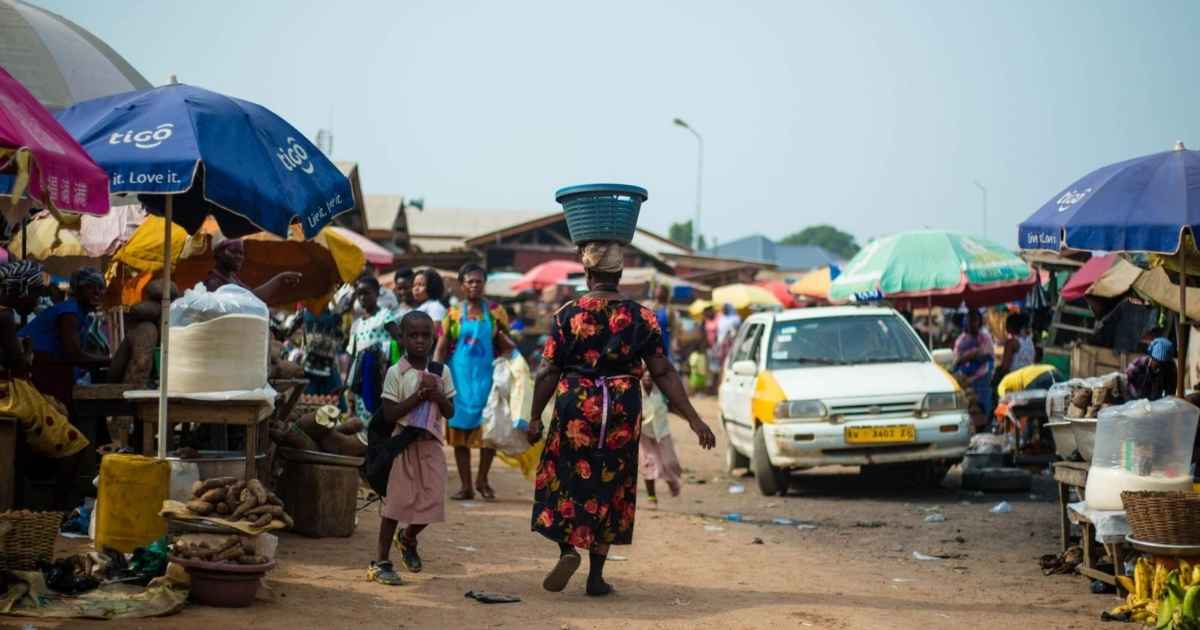
Image Source: REUTERS/Francis Kokoroko
Across the African continent, a familiar ghost has returned to the halls of power. From the populist rhetoric in the Sahel to the expanded social mandates in Southern Africa, “Socialist Democracy”—often rebranded as “Social Democracy”—is being hailed as the panacea for the continent’s persistent inequality and development laggardness. Advocates argue that the state must not only provide a safety net but must actively command the “heights of the economy” to ensure equity. However, evidence-based research and contemporary political trends reveal a starkly different reality: the socialist democratic model in Africa is inherently unstable, economically corrosive, and fundamentally incompatible with the long-term survival of democratic institutions.
The Structural Mirage of Socialist Democracy
The allure of socialism in Africa is historically rooted in the anti-colonial struggle. Early leaders like Kwame Nkrumah, Julius Nyerere, and Kenneth Kaunda viewed capitalism as an extension of imperialism and socialism as a return to indigenous “communalism.” Yet, as noted by the Varieties of Democracy (V-Dem) project, the resurgence of state-heavy models in the 21st century has consistently correlated with democratic backsliding (Nord et al., 2025).
The central conflict lies in the concentration of power. Democracy requires a dispersion of authority—checks, balances, and a vibrant, independent private sector that can act as a counterweight to the state. Socialism, by contrast, necessitates the centralization of economic decision-making. When the state becomes the primary employer, the sole distributor of contracts, and the arbiter of industrial success, “vertical accountability”—the ability of citizens to hold leaders accountable—is compromised (Brookings Institution, 2025). If your livelihood depends on a state-run enterprise or a government subsidy, your vote is no longer a tool of oversight; it becomes a survival mechanism used to appease the incumbent.
The Instability of the Command Model
The instability of socialist democratic experiments in Africa is not a matter of “bad implementation” but of “bad incentives.” Research from the Global Institute for Governance and Adaptability (GIGA) suggests that dissatisfaction with civilian governments often stems from their inability to meet the astronomical social expectations created by socialist rhetoric (GIGA Focus, 2025).
When African governments promise comprehensive welfare and state-led industrialization without the underlying tax base of a productive market economy, they inevitably resort to two destabilizing measures:
- Debt Accumulation: To fund populist social programs, states take on massive sovereign debt. As interest rates rise, these states face fiscal cliffs, leading to austerity measures that trigger the very “youth protests” and “social unrest” the socialist policies were meant to prevent.
- Institutional Erosion: To maintain control over dwindling resources, socialist-leaning regimes often hollow out judicial and legislative independence. The Mo Ibrahim Foundation (2023) has noted that the resurgence of military coups in the Sahel is frequently preceded by the failure of “strongman democracies” to deliver on centrally planned economic promises.
Socialism is incompatible with democracy in the African context because it removes the “diagonal accountability” provided by an independent middle class. Without a class of citizens whose wealth is independent of political favor, civil society loses its financial and political autonomy (African Liberty, 2025).
The Pragmatic Alternative: Fusing Free Markets with Democracy
The solution to Africa’s governance crisis does not lie in a return to the “scientific socialism” of the 1970s or the “military-populism” of the 2020s. It lies in a pragmatic fusion of the Free Market and Liberal Democracy.
History provides a clear empirical track record. Countries like Botswana, which moved toward market-oriented policies early on, have maintained the continent’s most stable democratic tradition. Even in the face of the 2024 peaceful transfer of power, Botswana’s resilience was anchored by a robust private sector and clear property rights (Dube, 2024).
A free-market democracy serves African development in three distinct, pragmatic ways:
- The Discipline of Competition: Unlike state monopolies (parastatals), which can survive indefinitely on taxpayer bailouts despite failure, private enterprises are subject to the “creative destruction” of the market. This forces innovation and efficiency—the only real drivers of long-term poverty reduction.
- The Protection of Rights: A market economy requires the rule of law to protect contracts and property. These same legal frameworks are the bedrock of human rights and political freedoms. You cannot have “economic freedom” without “civil freedom.”
- Youth Empowerment: The African Internet economy is projected to contribute nearly $180 billion to the continent’s GDP by 2025 (World Bank/IFC). This growth is driven not by state planning, but by digital entrepreneurs in Lagos, Nairobi, and Cape Town who operate in the least regulated, most competitive sectors of the economy (AUDA-NEPAD, 2025).
A Message to Africa’s Youth: The Entrepreneurial Solution
To the youth of Africa—who now comprise the largest demographic on the planet—the siren song of the “revolutionary state” is a trap. Military takeovers in Mali, Guinea, and Burkina Faso are often cheered as “anti-imperialist” or “pro-people,” but they represent the ultimate form of state control: the monopoly of violence combined with the monopoly of the economy. These regimes do not create wealth; they merely redistribute a shrinking pie.
The practical solution to your frustrations—unemployment, corruption, and stagnation—is not more state but more enterprise. The “African economic DNA” is historically market-based (African Liberty, 2025). Long before colonial borders, African societies flourished as commercial hubs, powered by networks of traders and private specialization.
Your future lies in the African Continental Free Trade Area (AfCFTA)—a market-driven project—and in the dismantling of the bureaucratic “shackles” that make it harder to start a business in Accra or Luanda than in Singapore. Demand that your leaders focus on “horizontal accountability”—protecting the competition—rather than “horizontal intervention”—controlling the outcomes.
Conclusion
Socialist democracies in Africa are fragile because they attempt to build a house of equity on a foundation of sand. Without the wealth-generating engine of the free market, democracy eventually collapses into autocracy or chaos. If we want a resilient Africa, we must choose the hard work of building institutions that protect the market, rather than the easy rhetoric of the state. The solution is clear: fuse the free market with democratic governance. Only then can we shift the continent from the fragility of state dependency to the security of shared prosperity.
References:
- African Liberty (2025). Leveraging Free Market Concept for Economic Growth in Africa.
- AUDA-NEPAD (2025). Africa Economic Development Journal.
- Brookings Institution (2026). Foresight Africa: State of Democracy in Africa.
- GIGA Focus (2025). Ten Things to Watch in Africa in 2025.
- Nord et al. (2025). V-Dem Institute Democracy Report 2025.
World Bank (2025). African Trade and Investment for Global Resilience.

Eric Coffie is a free market policy expert and founding president of the Institute for Liberty and Economic Education (ILEE).