
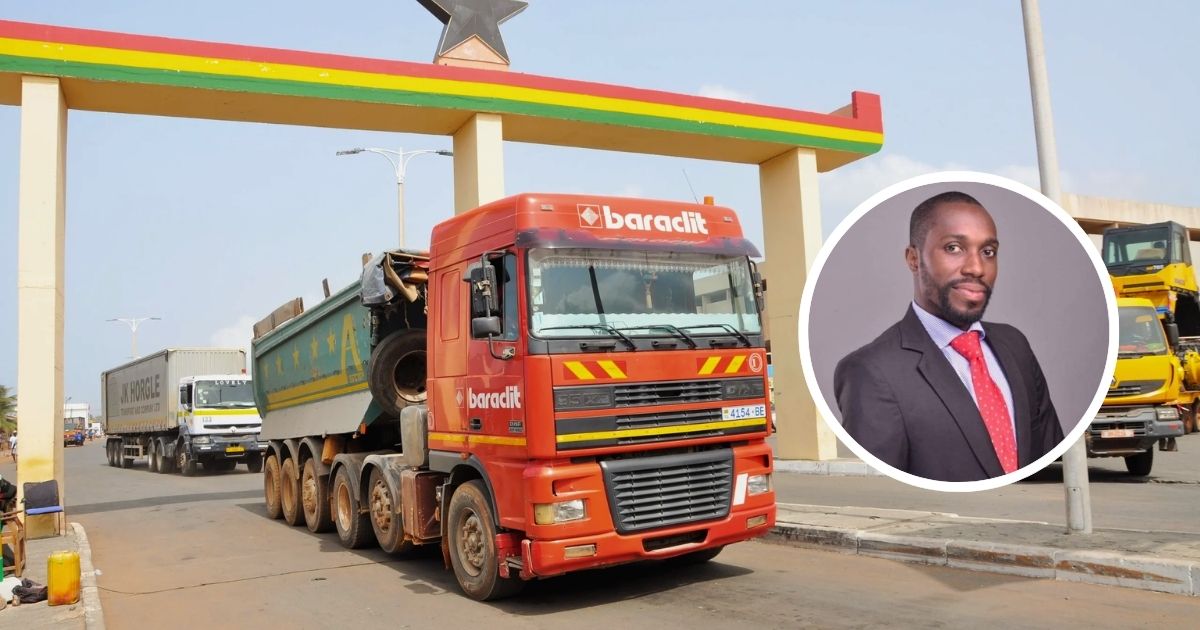
Dr. Paul Appiah-Konadu, a Senior Research Fellow at the Institute for Liberty & Economic Education (ILEE), has cautioned that the Finance Minister’s recent ban on the land transit of goods may inadvertently fuel smuggling rather than curtail it.
Speaking on UTV, Dr. Appiah-Konadu acknowledged the government’s mandate to curb illicit trade but argued that a blanket ban creates significant obstacles for intra-African commerce. He noted that such measures undermine the objectives of the African Continental Free Trade Area (AfCFTA), a framework in which Ghana is a primary stakeholder.
“Most trade within Africa is conducted via land, unlike our imports from Europe, China, or the Americas, which arrive by sea,” Dr. Appiah-Konadu explained. He urged the government to abandon the ban in favor of more nuanced, alternative strategies to address border security.
Addressing the Finance Minister’s concerns regarding the under-valuation of goods, Dr. Appiah-Konadu argued that a ban is not a cure-all. He suggested that the core of the issue lies in the integrity of customs officers stationed at border crossings and the inadequacy of existing weighing and valuation technology.
To effectively combat illicit border activities and ensure accurate duty collection, he called for a comprehensive overhaul of border management systems, emphasizing the need for better valuation systems and stricter oversight of port officials.


One Response
I believe its a good call.
Banning will invetently increase a lot of illegal trading which may affect revenge mobilization.